
Uncategorized
Vacheron Constantin Imitation Watches: A 2026 Movement-First Buying Guide
Two years of handling these watches on our own bench has left us with a conclusion we cannot shake: on 2026’s Vacheron Constantin imitation watches, the case work has quietly caught up with the photography, and the movement is now the only honest way to tell one build from another. Two examples of the same reference can look near-identical in a listing and feel like completely different objects once they are on a wrist.
So when buyers ask us the obvious question — what should I pay? — our answer is that it is the wrong first question. The right order is movement tier first, case shape second, finishing third, price last. Get that sequence wrong and you end up paying a premium for a phrase rather than for a part.
We also say this to everyone we advise, before anything else: these are not brand-backed products, there is no official warranty behind them, and it is on you to confirm the law where you live and to know who carries the customs responsibility. Shipping origin, delivery terms and clearance arrangements should be confirmed with the seller in writing before you pay. That is not a disclaimer we enjoy repeating, but leaving it until after checkout is how people get hurt.
The Movement Is Where These Watches Are Won or Lost
On dress references — Traditionnelle and Patrimony above all — thinness is the entire point. A fraction of a millimetre genuinely matters, because the soul of a dress watch is how it settles against the wrist and disappears under a shirt cuff. A thick movement destroys that illusion in one gesture, the moment you reach across a table.
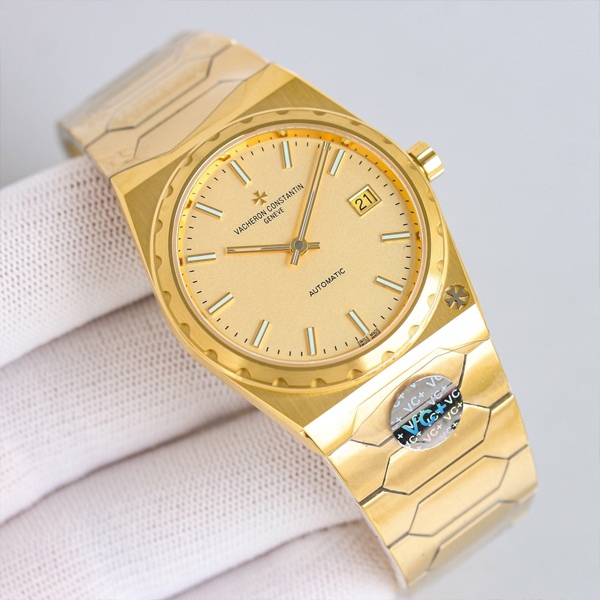
On sport, the priority flips. Overseas 4500V-style builds live or die on how the case flows into the bracelet and how the weight sits on the wrist. An integrated movement lets the maker hold thickness down and match the bracelet architecture much more closely. A general-purpose movement forces a compromise there, and we can usually spot it from a metre away.
The third reason is the least glamorous and the most expensive to get wrong: the movement sets daily rate deviation, noise, service life, and whether the thing can be repaired at all. Those four are precisely where cheap builds fail first. A handsome case wrapped around a movement nobody will touch is a paperweight with a good dial.
The rules we work to are short:
- Dress models — prioritise a thin movement.
- Sport models — prioritise an integrated movement.
- Anything under RMB 2,000 — expect “reads right from a distance” and nothing more.
What Each Price Band Actually Buys in 2026
The market sorts into four bands, and each band maps to a movement logic rather than to some vague notion of brand rank. That is the part most buyers miss. The number on the listing is a proxy for what is inside, not a grade of prestige.
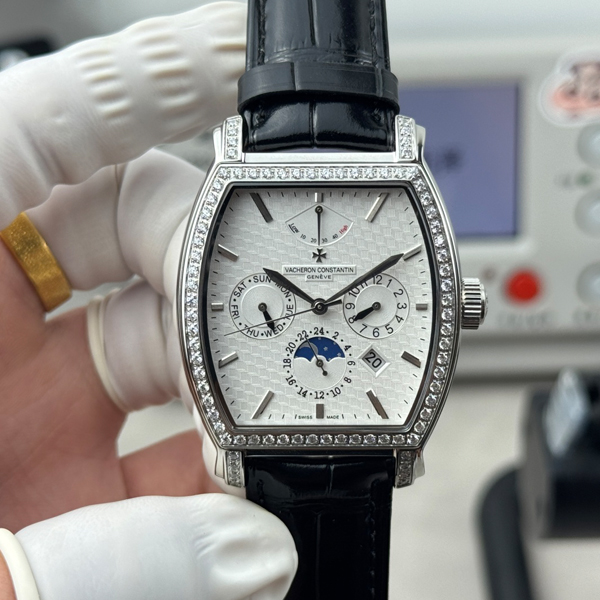
| Band (2026) | Movement logic | What you realistically get | Who it suits |
|---|---|---|---|
| RMB 1,000–2,000 | Basic domestic automatic | Correct case shape, readable dial, thick movement, audible rotor, abrupt date change, loose crown feel | Buyers only verifying the look |
| RMB 2,000–3,500 | Modified Miyota 9015 or equivalent thin domestic | Near-original thickness on dress cases, stable rate, easy parts sourcing | Most rational buyers stop here |
| RMB 3,500–6,000 | Integrated movement (Overseas-type sport) | Better case-to-bracelet transition, closer thickness, more convincing weight distribution | Sport-watch wearers who notice feel |
| RMB 6,000 and up | Integrated plus hand finishing, upgraded coating, sapphire or ceramic parts | Labour and craftsmanship, not accuracy | Buyers who know exactly what they want |
Read the second band carefully, because it is where most sensible money lands. A thin movement at that price puts the thickness close to the original’s on a dress case, holds a stable rate, and — the part nobody mentions in listings — uses parts that are still findable in the trade years later. For a dress watch, that combination is hard to beat.
The third band is often misunderstood. The extra money does not buy a more accurate watch; it buys a more coherent object. The case, thickness, bracelet and deployant can be built as one system, so the balance on the wrist feels closer to the reference. The trade-off is real, though: parts supply is poor, and a failure usually means replacing the whole movement rather than servicing it.
The top band is about hours of work — hand finishing, plating upgrades, substituted sapphire or ceramic components. Unless you already know what you are looking at, there is no reason to climb that high. Paying for craftsmanship you cannot perceive is the most common way to overspend.
One warning worth framing on the wall: the same reference from two different sellers can differ in price by a factor of two, and the usual reason is the movement and the finishing hours, not some mystery of “channels”. Ask for the movement model, the beat rate, the jewel count and real footage of the actual unit. That conversation will tell you more than a week of comparing price tables. And because figures move with time, exchange rates and batch, treat any quote as provisional and reconfirm it before ordering.
Five Points We Inspect Before Anything Else
Case and lugs. Most builds use 316L stainless steel; a few are upgraded to 904L. The upgrade resists corrosion better and polishes with a warmer sheen, but the everyday difference is smaller than the sales pitch implies. What we actually judge is whether the cut edges are crisp, whether the inside of the lugs carries burrs, and whether the brushing runs in one consistent direction all the way round.
Movement. 28,800 vibrations per hour is not automatically better than 21,600, and jewel count tells you even less than the marketing suggests. Watch the balance for steadiness, feel for even resistance through the winding, listen for scraping as the rotor turns. The classic cheap-movement symptoms are audible noise and large positional error.
Dial and hands. Under magnification, look for burrs at the hand pinion, indexes that do not sit flush, and paint with an orange-peel texture. Vacheron Constantin’s design language is extremely restrained, which makes it unforgiving: one stray burr reads as wrong from conversational distance.
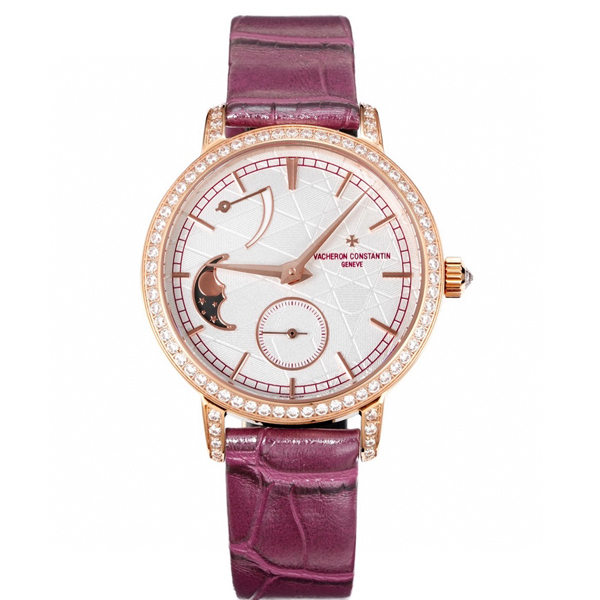
Bracelet and deployant. On sport builds the bracelet is where most of the tells hide — link gaps, chamfer quality, clasp tension. A good deployant closes with a clean, defined click. A poor one feels slack and slightly vague, and it never improves with use.
Water resistance. Almost all of these are life-proof only. A heavy rinse at the sink can be enough to let water past a seal. Treat any verbal “you can swim in it” as sales patter rather than specification, and have the seals checked rather than assumed.
Dress and Sport Need Different Specs
Comparing a Traditionnelle-style dress piece against an Overseas-style sport piece on the same checklist is a mistake we see constantly. The two are judged on different things.
| Dimension | Dress (Traditionnelle / Patrimony) | Sport (Overseas 4500V) |
|---|---|---|
| Diameter | 36–40 mm typical | Around 41 mm |
| Thickness | Core metric; thin-movement builds reach just over 9 mm | Integrated builds sit closer; general movements run 1–2 mm thicker |
| Safest dial | Two or three hands, no date | Reference-correct layout, clean bezel screws |
| Strap / bracelet | Crocodile-grain leather; check stitching and lug fit | Link gaps, chamfers, clasp snap |
| Main risk | Thickness giving it away at the cuff | Case-to-bracelet transition looking bolted-on |
On dress pieces, the two-hand or three-hand no-date version is simply safer. One less date window is one less aperture to get wrong, and the Patrimony family in particular is so clean that any flaw in the dial has nowhere to hide. Strap quality matters more than people expect as well — the stitching and the way the leather meets the lugs are visible every time you move your arm.
On sport, look at how the case flows into the bracelet, how the hex screws on the bezel are finished, and how clear the sapphire is. The Malte designs draw a different crowd again, and the question there is usually about proportion rather than hardware. We keep coming back to four comparison dimensions, though: thickness, weight, beat rate, and parts availability. Thickness governs the look, weight governs how it carries, beat rate relates to stability, and parts decide whether the thing can still be repaired in three years. Get those four answers and you can ignore a hundred retouched images.
Matching the Tier to the Wearer
For business dress wearers, shirt and cuff every day, a thin-movement dress build wins. Skip large diameters; 36–38 mm is the safer, cleaner choice. Sport and casual wearers, by contrast, usually suit an integrated-movement sport build with short sleeves and a metal bracelet, where the bracelet feel is a genuine bonus rather than a detail.
First-time buyers should stay in the RMB 2,000–3,000 range and wear it for three months before deciding anything. That trial period answers more than any review can. Gift buyers? We would rather talk you out of it. No official warranty and no proper paperwork means any problem lands on the relationship, not on a service centre.
On a slim wrist, watch the lug-to-lug distance, not just the diameter. Anything over 50 mm lug to lug will visibly overhang and look borrowed. Collectors should remember these have no collectible standing and almost no secondary market; treat them as a consumer purchase, not an asset, and you will enjoy them far more.
That last point is where we are most opinionated. Imitation watches genuinely open up a design language that would otherwise stay behind glass for most people, and that is worth something real. But the value and the limits should be spelled out with equal clarity, which is what this guide is for.
Six Misjudgements That Cost Buyers Money
Legal and customs risk is the first. Cross-border purchase means checking your own jurisdiction and import rules, and agreeing in writing who pays duty and who handles clearance. Shipping origin and logistics are always confirmed with the seller before you order — never assumed.
Then there is after-sales risk: no official warranty means a failed movement may only be solvable by full replacement. Ask whether the seller offers their own guarantee, how long it runs, and who pays return freight. Photo misjudgement follows close behind. Retouched listings and physical objects are different products. Insist on real footage covering four things: the running rate, the date change, the balance in motion, and the bracelet finishing.
Do not fall for the weight superstition, either. Added weights make a watch heavier, but the sensation is dead-heavy rather than balanced. Weight is not quality; distribution is. Meaningless slogans such as “1:1” and “factory-grade” have no standard behind them and cannot be verified. Only details can be verified. And keep water-resistance confusion out of the picture: life-proof is not waterproof. Hot water, steam and swimming pools are all out, regardless of what a label claims.
Seven Steps Before You Pay
- Fix the style and size. Decide dress or sport first, then measure your wrist and set a maximum diameter and lug-to-lug figure.
- Fix the movement tier. Thin for dress, integrated for sport. If the budget falls short, drop a tier — never drop the case size to compensate.
- Request real footage. Running, date change, balance, bracelet. All four, or walk away.
- Ask about parts and service. Guarantee length, whether straps can be bought separately, and what spares exist for that movement.
- Confirm shipping and clearance. Origin, method, and who pays what — all in writing.
- Inspect on arrival. Rate deviation and winding feel first, then dial and bracelet, then the seal condition. We would not run a water test on a new arrival ourselves.
- Log it. Note the seller, batch, movement model and the rate after three months. That record is what makes your next purchase a better one.
A Last Word on Expectations
The real value of a Vacheron Constantin imitation watch is access: a restrained, recognisable design language for a fraction of what the original costs. The limits are equally concrete — movement craftsmanship, after-sales support, and resale liquidity. Holding both halves in view at the same time is what separates a satisfied buyer from a disappointed one.
If we had to compress 2026 into one sentence, it would be this: settle the movement tier first, then talk about money, then verify the details with real footage. The three safest routes remain a thin movement for dress, an integrated movement for sport, and a lower tier for a first purchase while you work out whether the style genuinely suits you. Historiques-style references fall into the same logic — proportion and honesty of detail over claims.
And before payment, close out the three administrative items: the legal position where you live, the customs arrangement, and the after-sales terms. Shipping origin, delivery method and clearance responsibility should all be confirmed with the seller at the point of order. None of it is exciting, but it is the difference between a watch you enjoy and a problem you own. See the boundaries clearly and the pleasure is genuine.
