
Uncategorized
Vacheron Constantin Imitation Watches: 36mm vs 40mm Wrist Fit Guide (2026)
Size is usually the last thing people check when they start shopping for a Vacheron Constantin imitation watch, and it’s the first thing that decides whether the watch ever gets worn. A beautifully finished 41mm sports piece on a 16cm wrist ends up in a drawer far faster than a plain 36mm dress watch that actually fits. We’ve seen it happen often enough to say it plainly.
So here’s the short answer before the detail. If your wrist measures roughly 15.5cm to 17cm, start with 36mm to 38mm. The watch sits more securely, and the case slides under a shirt cuff without a fight. Between 17cm and 18cm, 40mm is a sensible main-watch size. Only past about 18.5cm does a 41mm sports model become the natural pick. Bigger isn’t more convincing — case proportions, lug-to-lug length, case thickness, dial openness and strap width all do more work on the wrist than the diameter number on a spec sheet.
Before you buy, measure your wrist circumference and wrist width, then ask the seller for calliper photos, a wrist-roll video and the strap’s adjustment range. The commercial appeal of a Vacheron Constantin imitation watch is straightforward: you get a classic design language for a budget that doesn’t require a second mortgage. But a size that doesn’t suit you quietly kills wear frequency, and it also raises the cost of returns and resale. Prices below are indicative ranges only — the actual quote, shipping origin and delivery terms need to be confirmed with the seller before ordering, and customs responsibility should be asked about up front rather than assumed.
What the money actually buys at each size
Price tiers don’t map neatly onto size numbers, which is the first thing people get wrong. A 36mm can easily cost more than a 40mm base model if it carries a mother-of-pearl dial, stone setting, a special strap or a thinner case set. The 40mm group is the mainstay of the Vacheron Constantin imitation watch market, and there the spread comes down to movement type, case finishing, dial printing, hand finishing, strap material and clasp construction. The 41mm sports models tend to run higher in the mid and upper tiers because there are more bracelet links, a more complex case shape, and more labour in the lugs and bezel.
| Tier | What you’re paying for | Where it shows up most |
|---|---|---|
| Entry | Convincing look, basic timekeeping | Simple three-hand 36mm and 40mm references |
| Mid | Thin case set, applied indices, blued hands, bracelet finishing | 40mm core models, some 36mm dress variants |
| Upper | Complications, movement decoration, tighter assembly QC | 41mm sports, detailed 36mm variants |
Ask whether the quote includes a spare strap, a clasp, a stated after-sales period and shipping insurance. Labels like “best-value replica Vacheron Constantin” tell you nothing on their own. And here’s a point worth repeating: price tier and real quality don’t always move together — how well the size suits your wrist affects day-to-day value far more than one tier up or down.
Reading the watch properly, part by part
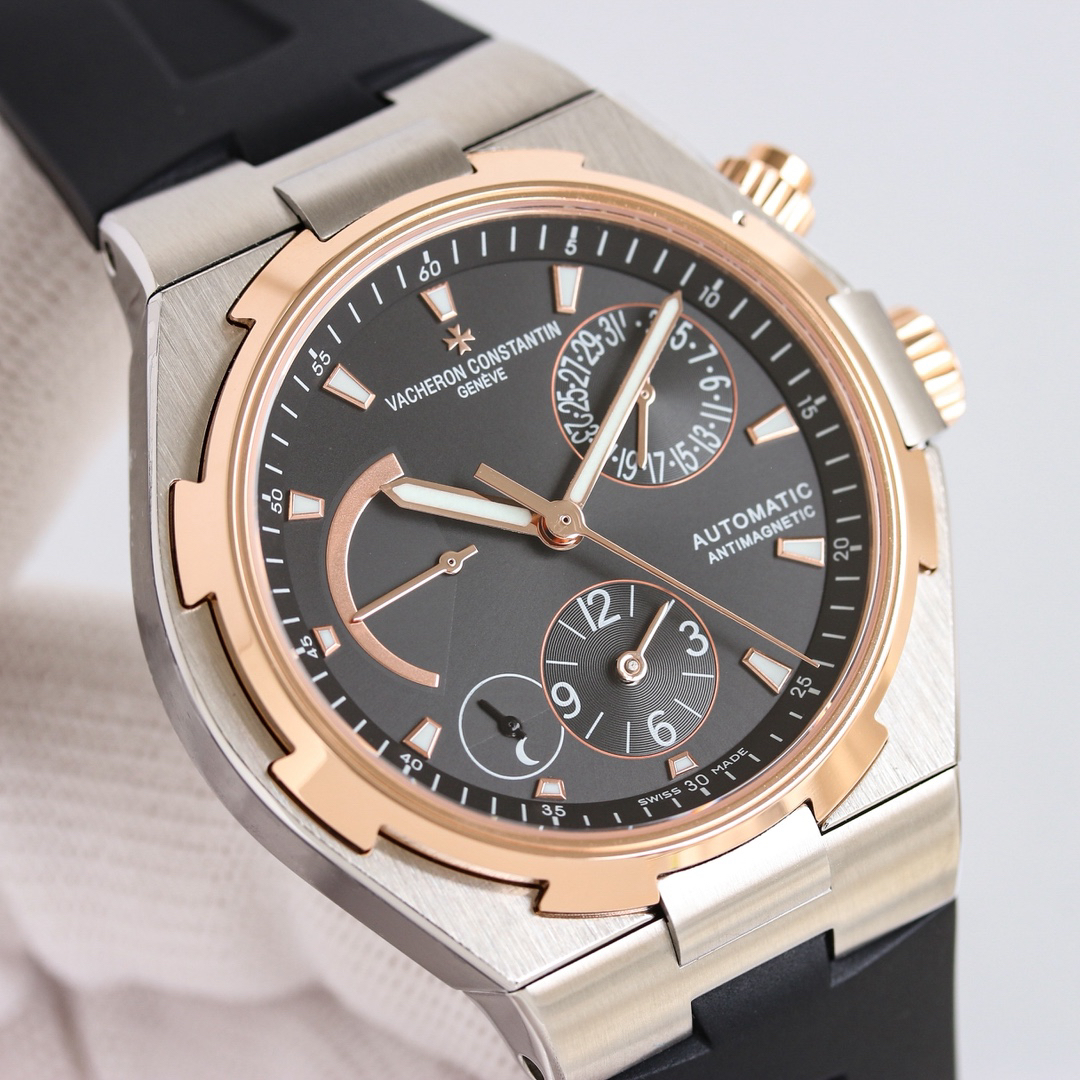
Assessing quality means taking the watch apart conceptually: case, lugs, bezel, dial, hands, movement, strap, clasp. Fit starts with lug-to-lug length, not diameter. A 36mm whose lugs run long will still overhang a slim wrist, and that’s the single most common thing we see in customer photos. Next, look at case thickness and how far the lugs curve down; a thin 40mm usually hugs the wrist better than a thick 41mm. Dial openness, index width and bezel width all shift the visual size — a narrow bezel reads larger, a dark dial reads smaller, and a light or sunray dial visually expands the case.
Evidence should be verifiable rather than aesthetic. In our inspection we want calliper shots of the case diameter, lug-to-lug length, thickness and strap width; macro photos of the dial printing; the edge bevel on the hands; the depth of the engraving on the clasp; the balance wheel and bridge finishing on the movement; and the stitching and hole spacing on the strap. The usual weakness in replica reviews is a front-on beauty shot with no side profile and no lug curvature — which is exactly what hides a fit problem. After-sales clarity matters just as much: can the strap be adjusted, can the clasp be swapped, and what happens if something goes wrong? Get that in writing before you pay.
36mm vs 40mm vs 41mm: the wrist fit comparison
This is the comparison most people are actually making, so it’s worth putting side by side rather than describing in prose.
| Diameter | Suggested wrist | Strengths | Watch-outs |
|---|---|---|---|
| 36mm | 15–17cm | Cuff-friendly, strong dress character | Less presence in sporty settings |
| 40mm | 16.5–18cm | Balances formal and casual wear | Depends heavily on thickness and lug length |
| 41mm | 17.5–19cm | Bracelet presence, sporty feel | Can look wide on slim wrists |
Don’t log diameters alone. Record lug-to-lug length, case thickness, strap width and clasp adjustment range in the same place, then compare. A light dial on a 36mm reads more refined; a dark dial on a 40mm reads more restrained. A narrow bezel can make a 36mm look close to 38mm, and a wide bezel adds visual bulk to a 41mm. For formal wear, prioritise a thin case and a smaller diameter; for casual wear you can relax up to 40mm or 41mm.
If you’re specifically weighing up whether the 36mm or 40mm Vacheron Constantin imitation watches will sit better on your wrist, the cheapest test is still the best one: cut a paper template to the seller’s stated dimensions, tape it to your wrist, and judge it against your shirt cuff width. Five minutes of work, one return avoided.
Who each size suits, and where you’ll wear it
These watches appeal to enthusiasts who want classic design without the budget of the original, and the size answer changes with the person. Slim-wristed men, women and anyone wearing a unisex style will usually find 36mm to 38mm easier to live with day to day. Men with wrists above 17cm can treat 40mm as the commuter default. Thicker wrists, or a preference for bracelet watches, justify moving up to 41mm.
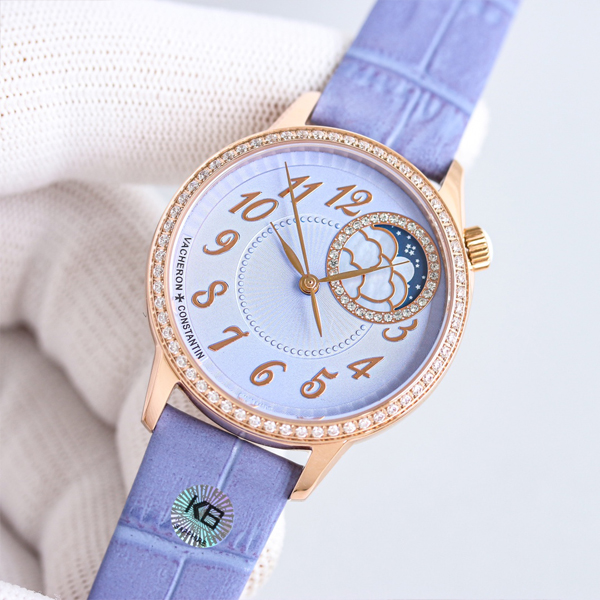
Match the watch to the occasion as well as the wrist. Weddings, business meetings and formal commuting favour a thin case and smaller diameter so the cuff stays clean. Weekends and short sleeves can carry a larger diameter and a heavier bracelet. If the watch is a gift, confirm the strap adjustment range and the returns policy before anything else. On the secondary market, neutral sizes tend to move more easily, while oversized pieces sit in a narrower pool of buyers.
The same logic applies when you compare against the original. The genuine proportions are a useful reference point, but your wrist is the final judge. Don’t pick an oversized case in pursuit of a closer resemblance — low wear frequency cancels out whatever you saved. Within the collection, references grouped under Égérie lean dressy in character while Fiftysix pieces sit closer to everyday wear, so the case size you choose should follow the style you’ll actually use most.
Five misjudgements we see constantly
- Treating diameter as the only dimension. Lug-to-lug length decides overhang, not the number on the dial.
- Ignoring case thickness. A thick case sits proud of the wrist no matter how good the strap is.
- Ignoring strap width. A wide strap changes how large the whole assembly feels.
- Being led by camera angles. A watch that looks small in a photo can look big in person if the lugs flare outward; one that looks thin head-on can be thick in profile.
- Unclear shipping and customs expectations. Confirm shipping origin and delivery terms with the seller before ordering, and settle who handles customs and any associated charges. Treat any absolute promise about stock location or dispatch point with caution.
Two more risks round this out. Vague after-sales terms are a real problem — strap adjustment, clasp replacement and movement servicing need to be confirmed as included or not. And chasing the lowest price can mean the strap material or the QC steps were cut to get there. Impulse buying is the last one; the cost of returning a badly sized watch is usually higher than the cost of waiting a week for more information. The rational move is to collect multi-angle photos, calliper shots and a wrist video, then cross-check all of it against your own measurements.
Your decision path, in six steps
- Measure wrist circumference and wrist width and write both down in centimetres.
- Decide the primary scenario: formal wear points to 36–40mm, sporty wear to 40–41mm.
- Ask for lug-to-lug length and case thickness explicitly.
- Confirm strap width and the number of adjustment holes.
- Request calliper photos, a side profile shot and a wrist-roll video.
- Verify after-sales terms, shipping origin, delivery method and customs responsibility.
The condensed tree is simple enough to remember. 15–16.5cm: go 36mm first. 16.5–17.5cm: choose between 36mm and 40mm based on scenario. 17.5–18.5cm: 40mm is the default. Above 18.5cm: consider a 41mm sports model. The value of a Vacheron Constantin imitation watch comes from design accessibility, but that only holds when the size is right and the information is transparent. If a seller can’t supply basic measurements, walk away — don’t fill the gaps with imagination.
Frequently asked questions
16cm wrist: 36mm or 40mm?
16cm sits in the slimmer range, so 36mm is usually the safer choice — particularly a thin-cased dress model, where the cuff closes more naturally. If you prefer a sportier look and can live with the presence of a bracelet, a 40mm is worth trying, but confirm that the lug-to-lug length doesn’t extend far beyond your wrist width and ask for a side-profile photo showing real thickness. Don’t judge from front-on photos alone; on a slim wrist, oversized cases show up first as a gap under the lug tips.
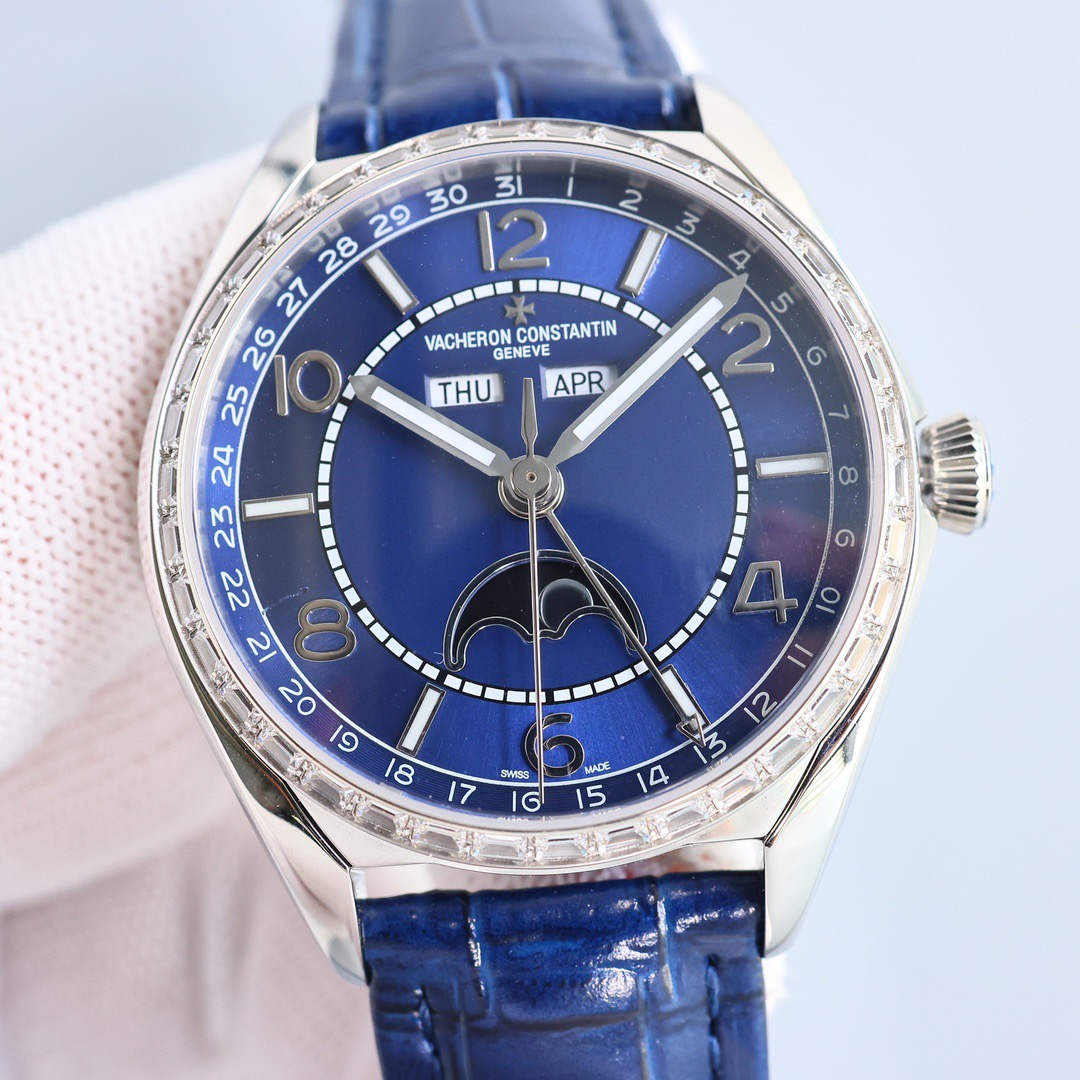
Will a 41mm sports model look too big?
Whether 41mm looks large depends on wrist width, lug curvature and bracelet width rather than diameter by itself. Below a 17.5cm wrist circumference, and on narrower wrists generally, a 41mm tends to read wide; above 18.5cm with a taste for bracelet presence, it suits well. Before buying, have the seller photograph the watch on a wrist at the same angle you’d see it yourself, and provide the lug-to-lug measurement. If you mostly wear fitted shirt cuffs, a 41mm sports model may be less practical than a 40mm dress piece.
Does a bigger size always cost more?
No. A 36mm with a mother-of-pearl dial, stone setting or a special strap can be quoted above a basic 40mm. On 40mm models the price is driven more by movement, case finishing and dial work. On 41mm sports models the extra bracelet links and more complex construction often push mid and upper tier quotes higher. To judge whether a price is fair, break it down into materials, finishing, accessories and after-sales support rather than extrapolating from diameter.
How do I verify the measurements a seller gives me?
Ask for calliper readings of case diameter, lug-to-lug length, case thickness and strap width, photographed from the same viewpoint as the watch itself. Then ask for a video of the watch worn on a wrist of known circumference, ideally including the arm hanging naturally and the wrist raised. You can also cut a paper template to those numbers and tape it to your wrist as a first filter. When the numbers, the video and the template all agree, the chance of a misjudgement drops sharply.
Can I fix an oversized watch with the strap?
A strap only changes tightness — it can’t alter lug-to-lug length or case thickness, and both of those drive the visual proportions. Tightening the strap won’t stop overlong lugs from reaching past the edge of your wrist, and a thick case doesn’t get thinner with a strap change. If you’re close to a threshold, go one size down or choose a thinner case set, then fine-tune comfort with the strap. On a slim wrist, the right lug curvature matters more than an extra bracelet link.
Where we land
Size is the first problem to solve, not the last. Measure wrist circumference, wrist width and cuff width before you discuss versions, prices or aesthetics — the order matters. 36mm suits slim wrists and formal wear, 40mm is the balance point for most people, and 41mm makes more sense on thicker wrists or for anyone who wants bracelet presence. A Vacheron Constantin imitation watch offers real design accessibility, but buyers should understand both its value and its limits, and shouldn’t treat stock location or dispatch point as a guarantee; all shipping and customs details should be confirmed with the seller before ordering. Our standard isn’t “does it look identical” but whether the size fits, the information is transparent and the after-sales terms are clear — that’s what keeps a watch on your wrist for years rather than months.
